
As part of the Vietnam Medi-Pharm Expo 2026, Dr. Nguyen Lam Vuong, MD, PhD, represented Kingston Healthcare Technologies in presenting the topic “Smart Healthcare 1 – 5 – 72”, offering a perspective on applying technology to strengthen grassroots healthcare capacity, optimize screening processes and build a smart healthcare system in line with the development direction of Vietnam’s healthcare sector.
The presentation not only introduced technology solutions but also analyzed the challenges facing today’s healthcare system and proposed a scalable deployment model aligned with the digital health development strategy and the spirit of Resolution 72-NQ/TW
1. At Vietnam Medi-Pharm Expo 2026: Why does healthcare need to operate in a new way?
According to the presentation, the healthcare sector is facing growing pressure as demand for medical examination, treatment and healthcare continues to rise.
At many healthcare facilities, especially at the grassroots level, challenges such as overcrowding, staff shortages, lack of equipment and processes that still rely heavily on manual work are affecting operational efficiency and the patient experience. Meanwhile, people expect faster access to healthcare services, with their data managed in a unified way and monitored continuously.
According to Kingston Healthcare Technologies, digital transformation is not just about digitizing processes, but about building a healthcare model that is scalable, optimizes resources and improves service quality.
2. The “Smart Healthcare 1 – 5 – 72” Model
The “1 – 5 – 72” message was developed by Kingston Healthcare Technologies as a practical implementation direction:
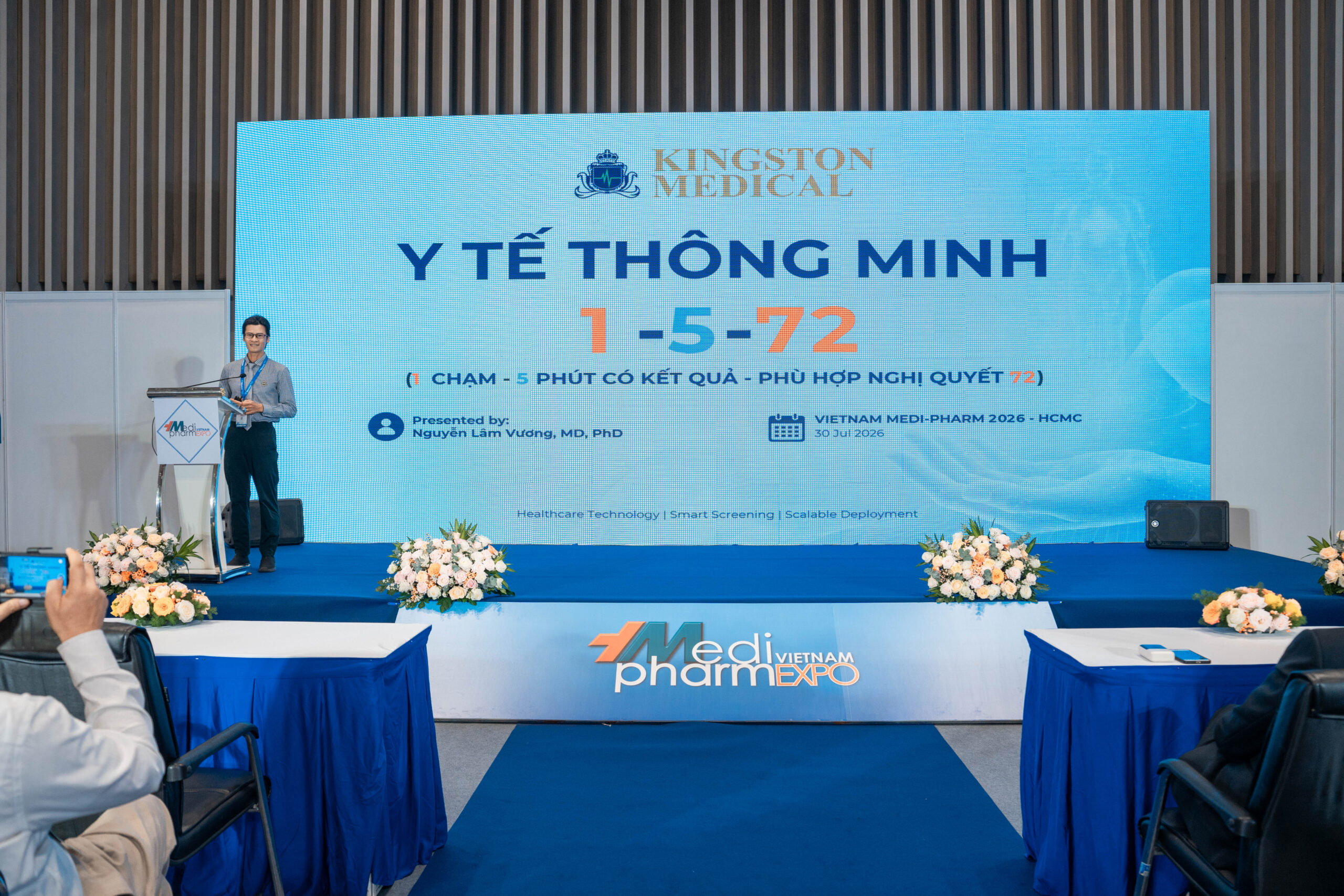
Kingston Healthcare Technologies introduces the Smart Healthcare 1-5-72 model at Vietnam Medi-Pharm Expo 2026.
- 1 touch to start the screening process
- 5 minutes, enough to complete the process and receive initial results
- 72 reflects a development direction aligned with Resolution 72-NQ/TW on reforming the healthcare system
The model focuses on creating a simple, standardized screening process that can be deployed at scale, helping improve people’s access to healthcare services.
3. Three Pillars of the Digital Health Ecosystem
In the presentation, Kingston Healthcare Technologies introduced a digital transformation model built on three pillars:
- Technology as the pillar: applying AI, IoMT, Telehealth and digital infrastructure to support screening, data management and professional connectivity.
- Grassroots healthcare as the foundation: strengthening the capacity of primary care and extending services to the community.
- People at the center: aiming for a more convenient experience, faster access to services and more proactive health management.
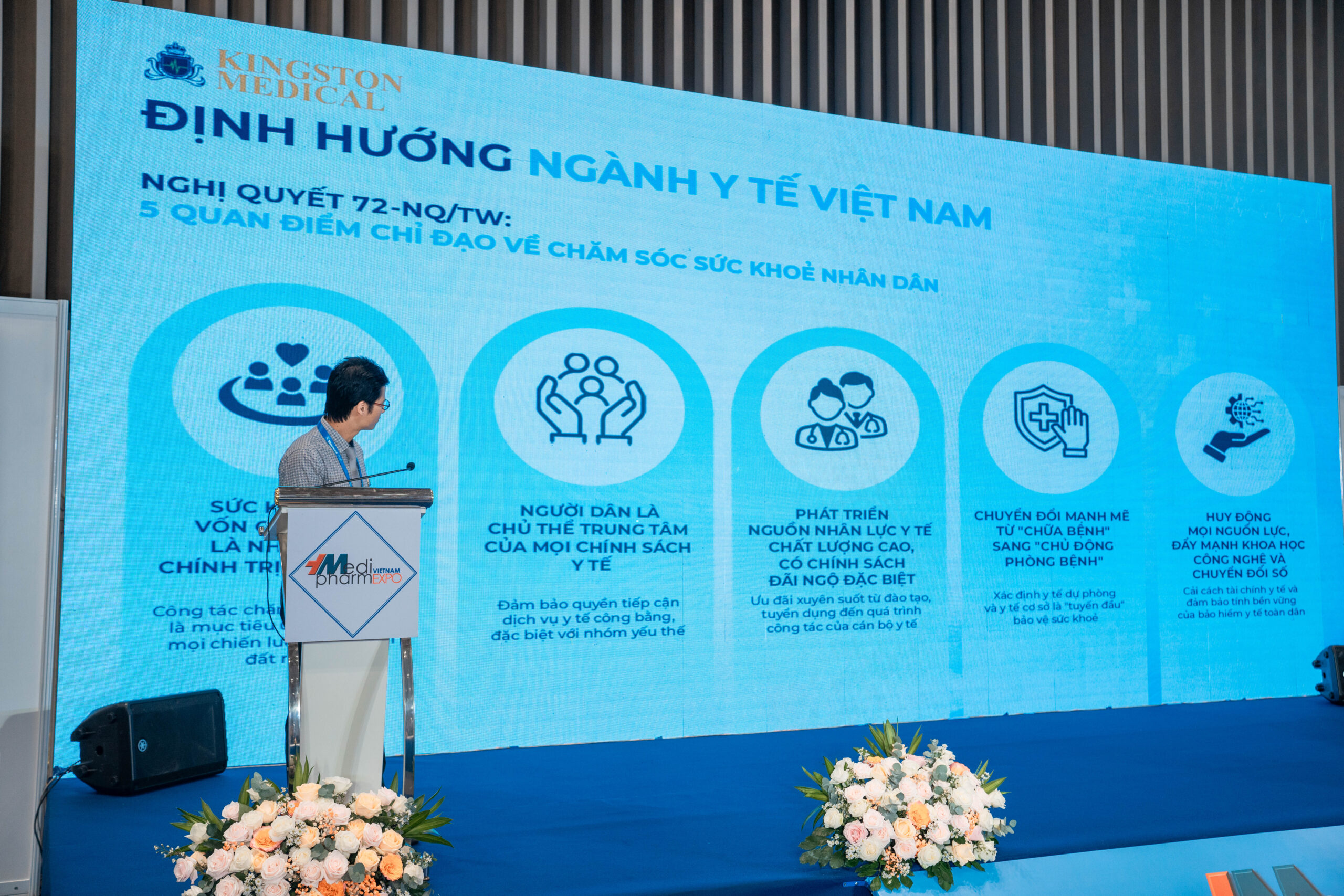
The 1-5-72 model aims to deliver a convenient experience, helping people manage their health more proactively.
This is the direction Kingston is pursuing in researching and developing digital health solutions in Vietnam.
4. Technology Increases Healthcare Capacity Without a Proportional Increase in Staff
One of the topics of interest at the conference was how technology helps healthcare facilities improve their service capacity.
According to Kingston Healthcare Technologies, automating the screening process helps:
- Standardize patient intake and initial examination
- Collect accurate and consistent health data
- Reduce manual data entry
- Support scaling up services by adding devices instead of proportionally increasing staff
This is the foundation for building a smart healthcare model that can be flexibly deployed in hospitals, clinics, enterprises and communities.
5. Medi-Kiosk and Medi-Case – Solutions That Bring the Smart Healthcare Model to Life
To realize this direction, Kingston Healthcare Technologies has developed a digital healthcare ecosystem with two flagship solutions.
Medi-Kiosk is a smart health check-up station for healthcare facilities with high patient volumes, helping standardize the screening process and automatically collect data.
Medi-Case is a mobile health check-up solution suitable for deployment in communities, enterprises, rural and hard-to-reach areas, helping extend healthcare services beyond the hospital.
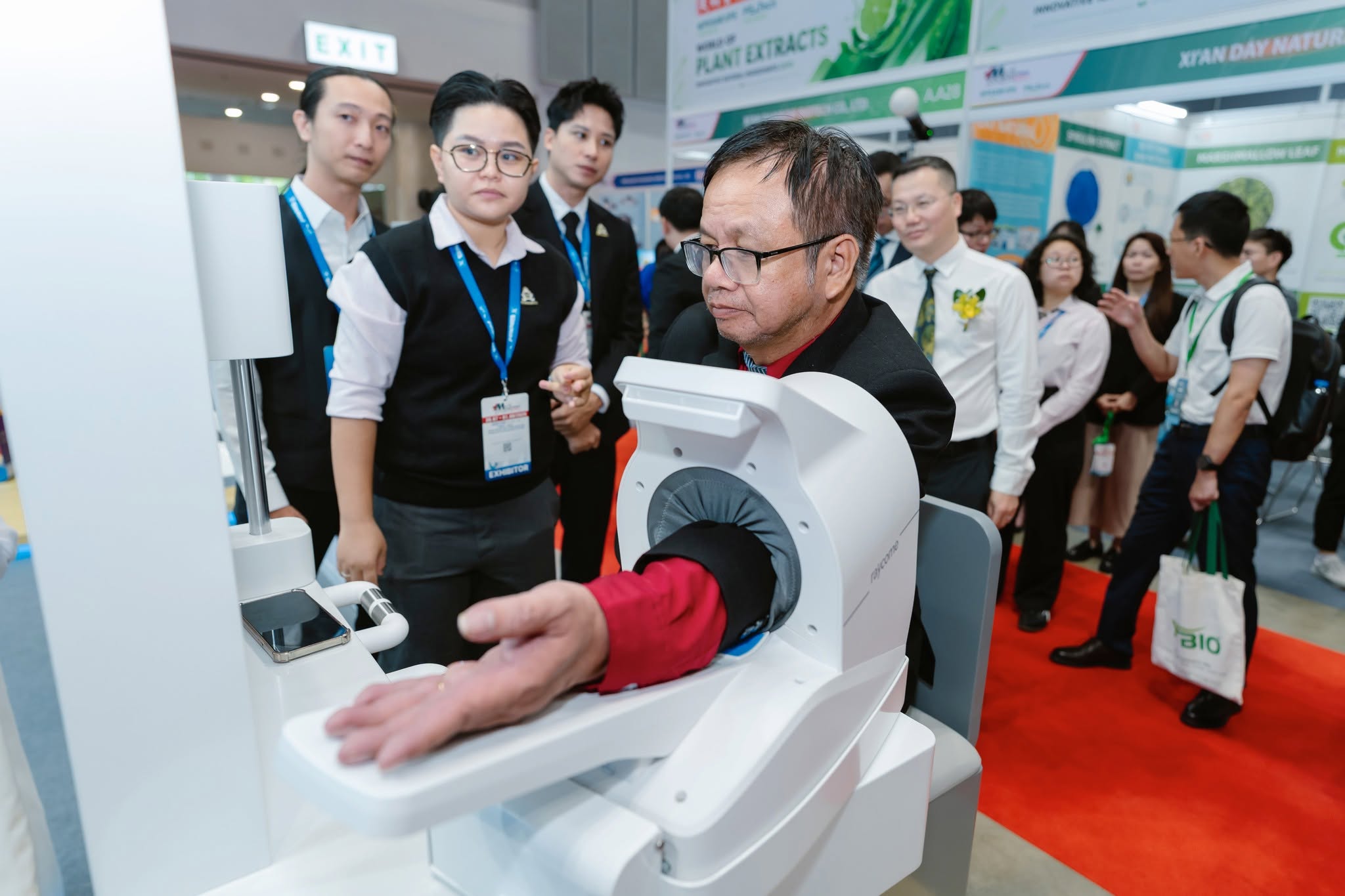
The solution helps extend healthcare services to rural and hard-to-reach areas.
According to deployment data presented at the conference, the system can support the screening of more than 250 people in an 8-hour shift, with an average time of about 5 minutes per person, while optimizing about 60–70% of resources for routine screening tasks. These figures are shared from Kingston Healthcare Technologies’ real-world deployment experience.
6. Supporting Vietnam’s Healthcare Digital Transformation
Participating as a speaker on the topic “Smart Healthcare 1 – 5 – 72” is part of Kingston Healthcare Technologies’ commitment to sharing deployment experience, connecting with the professional community and contributing to healthcare digital transformation in Vietnam.
By combining technology, data and real-world deployment experience, Kingston aims to build scalable healthcare models that help strengthen grassroots healthcare capacity and bring quality healthcare services closer to people.