Healthcare technology becoming more accessible to people is no longer a distant concept, but is gradually becoming a reality at commune and ward health stations. From the real-world experience of residents in Hung Long Commune, two Medi-Kiosk and Medi-Case of Kingston Healthcare Technologies solutions show that the value of healthcare technology lies not only in the devices themselves, but also in their ability to bring health screening activities closer to the community.
“Now health checkups can be done right in the local area — much more convenient.” — Shared by a resident of Hung Long Commune
A simple remark after directly experiencing Medi-Kiosk reflects, in part, what Kingston Healthcare Technologies aims for when bringing digital health solutions into practice: technology only truly creates value when it makes healthcare more convenient, accessible, and closer to the people.
From a Technology Device to Real Experiences of Local Residents
As part of the program donating Medi-Kiosk and Medi-Case to the Hung Long Commune Health Station, Ho Chi Minh City, local residents had the opportunity to directly experience Kingston Healthcare Technologies' smart health screening solutions. Rather than simply introducing technical specifications, the program created conditions for these solutions to be deployed in real-world settings — where residents and healthcare staff could directly access, experience, and assess their convenience in practical use.
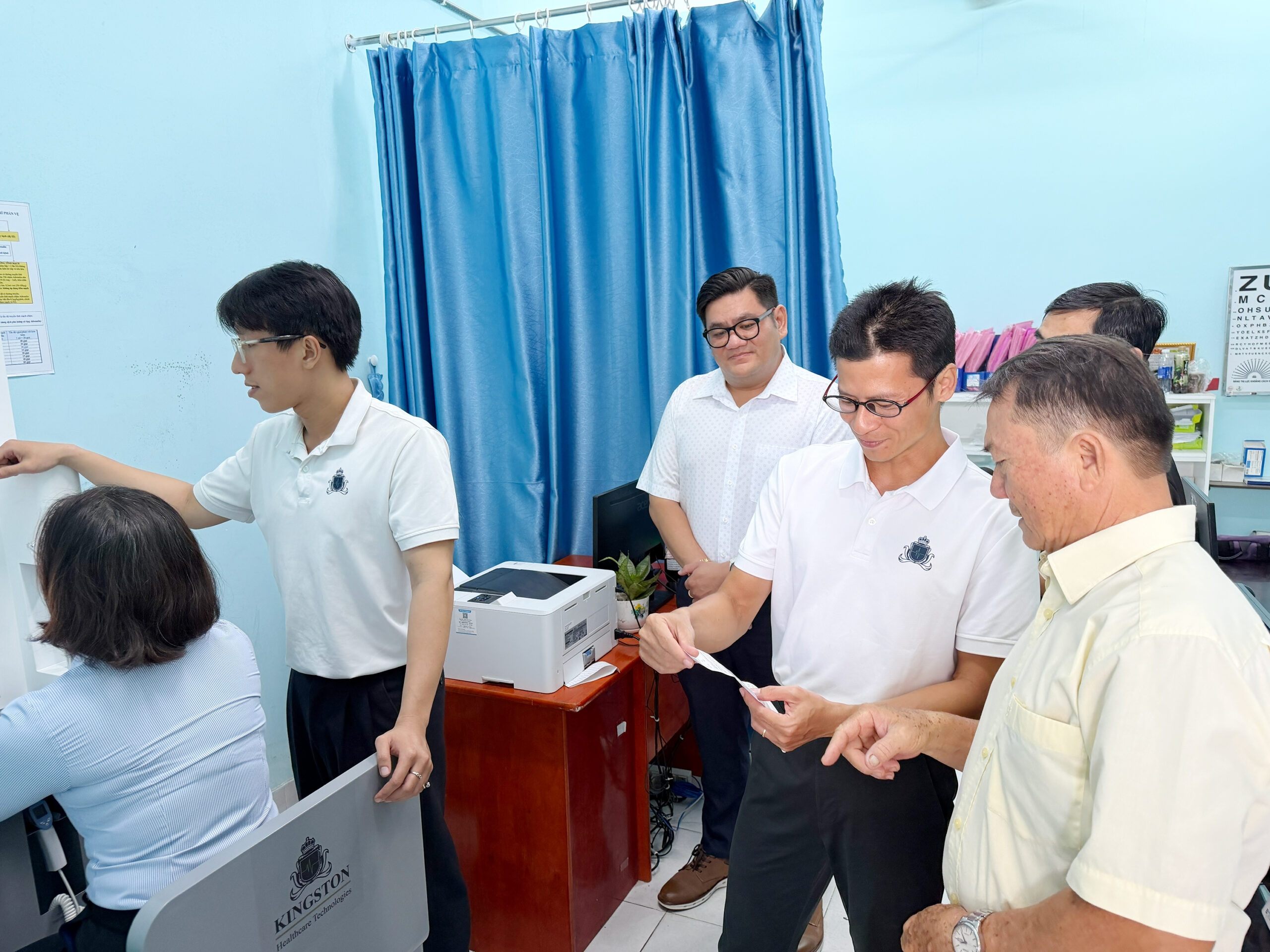
Many residents shared a common observation after the experience: health checkups became much more convenient when they could be done locally, instead of having to travel to a healthcare facility far away. This is also one of the key values of bringing healthcare technology to the grassroots level: creating more opportunities for people to proactively access screening activities and pay attention to their health indicators right where they live.
Medi-Kiosk Supports Health Screening Right in the Community
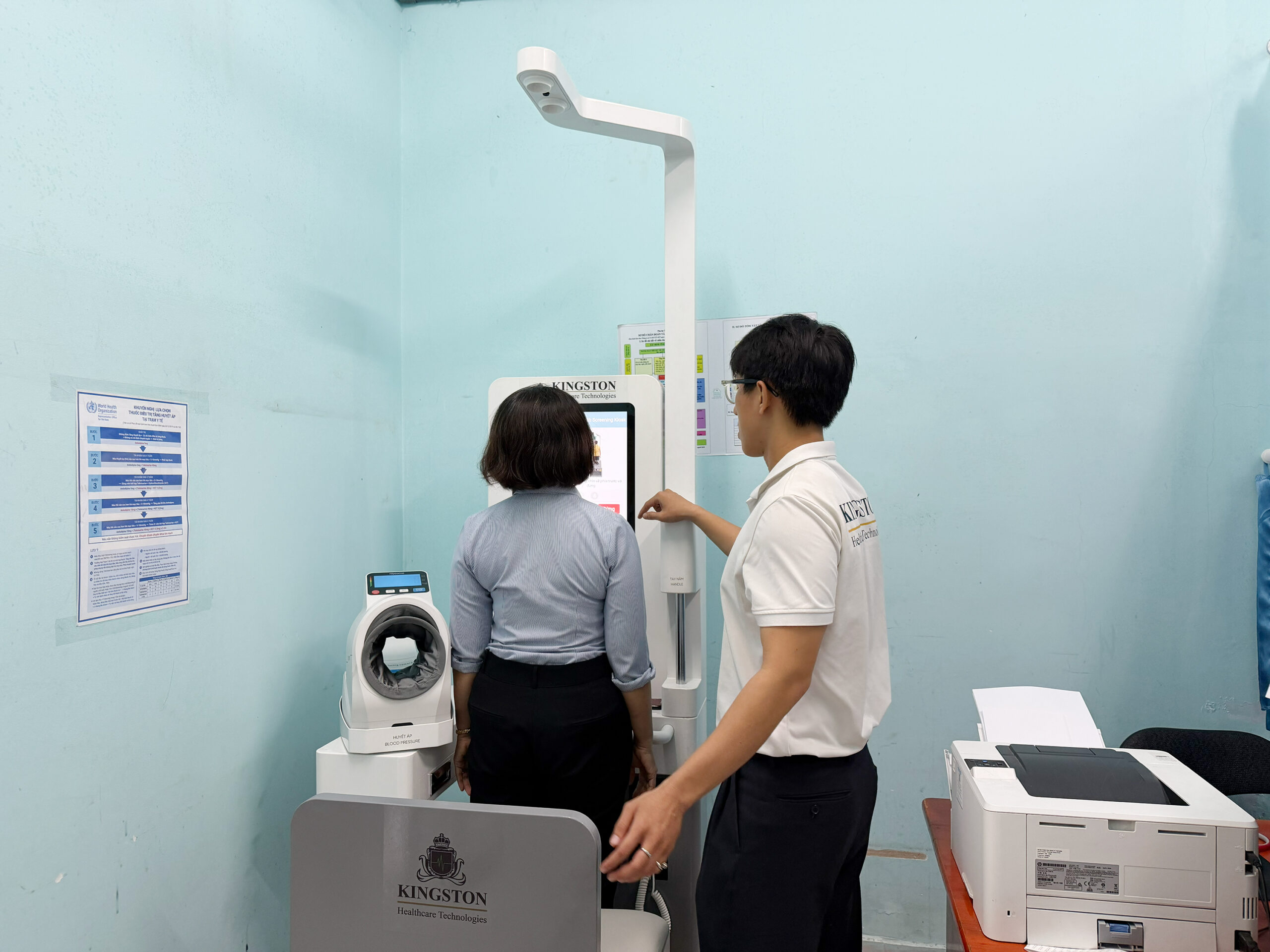
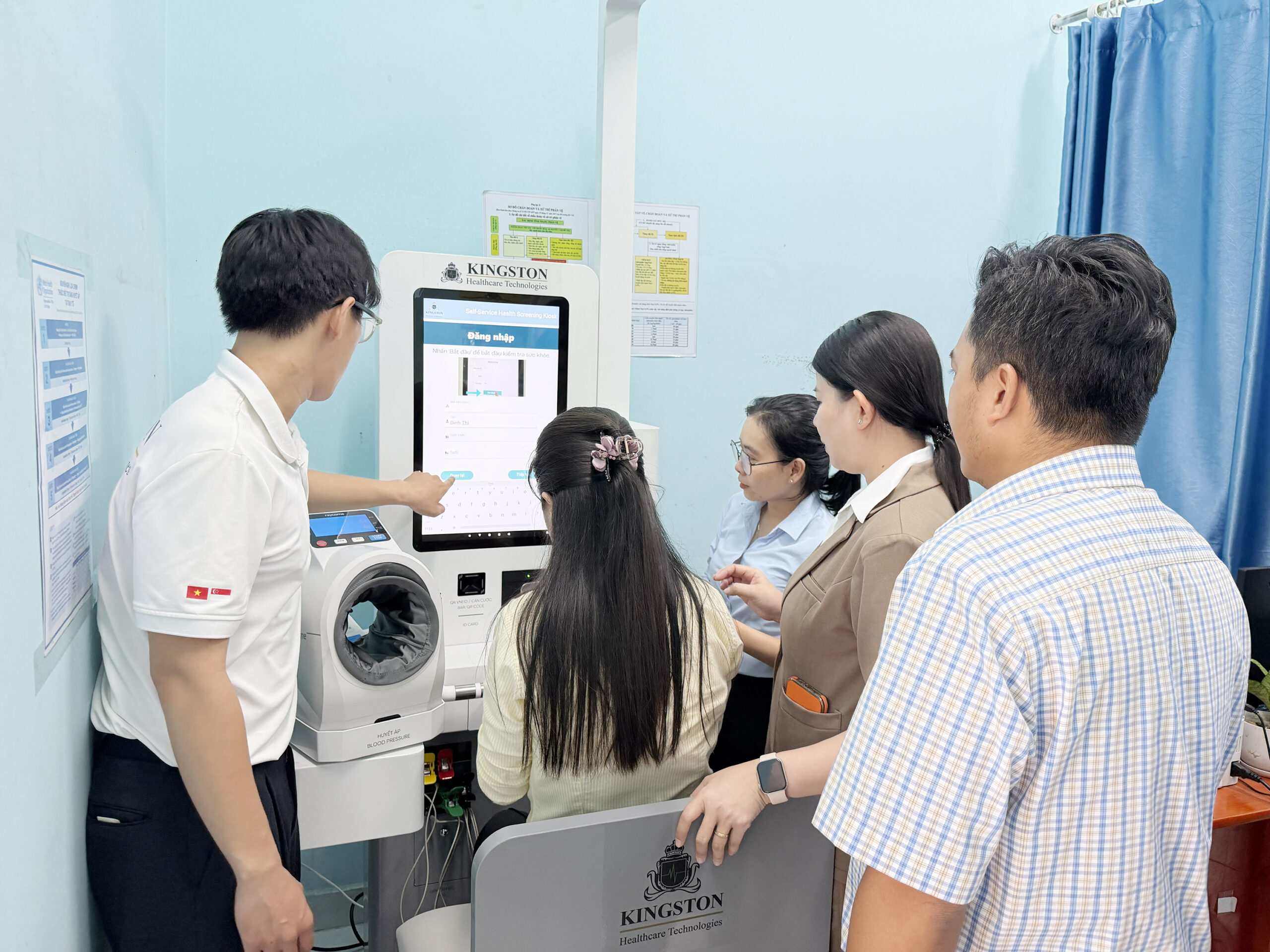
Medi-Kiosk is a smart health screening station designed to support the initial health check steps through a digitized process. Depending on the configuration and deployment program, the system can help record health indicators such as height, weight, BMI, blood pressure, heart rate, SpO₂, temperature, electrocardiogram (ECG), and body composition. What matters is not just the ability to perform multiple measurements at one point, but also how the indicators are recorded as structured digital data, reducing manual data entry and creating a more convenient foundation for managing screening results. For residents, the step-by-step guided process also makes accessing initial health indicators more intuitive and easier to carry out.
Medi-Case Extends Screening Activities Beyond Health Facilities
If Medi-Kiosk creates a fixed screening point, Medi-Case is developed to be more flexible. It is a mobile health screening solution that integrates digital medical devices into a compact system, helping healthcare teams deploy screening programs across multiple locations. This model suits community healthcare activities, mobile screening programs, or areas that need flexible deployment. When Medi-Kiosk and Medi-Case operate together within one ecosystem, screening activities are no longer limited to a single point but can be organized flexibly according to the actual needs of each locality. This is also how healthcare technology becomes more accessible in everyday life, rather than being confined to one fixed location.
Technology Matters When the Distance to Healthcare Is Shortened
Digital transformation in healthcare is not just a story about devices, software, or data. From the residents' perspective, what brings healthcare technology closer to people does not lie in technical specifications, but in a very practical question: does the technology make access to healthcare more convenient? In Hung Long, feedback from residents reveals a notable insight: when health checkups are brought closer to the community, people gain more opportunities to access initial screening steps without necessarily having to begin their healthcare journey at a facility far away. This is especially meaningful for the development direction of primary healthcare toward a proactive approach, where everyone is encouraged to pay attention to their health indicators early on, rather than only seeking medical services after a problem has already appeared.
Supporting Grassroots Healthcare with Practical Tools
For Kingston Healthcare Technologies, bringing technology to the community is not meant to replace the role of doctors or healthcare staff. On the contrary, Medi-Kiosk and Medi-Case are designed as supporting tools that help organize screening, data recording, and healthcare program deployment in a more convenient and systematic way. When digitizable tasks are supported by technology, healthcare staff gain more time and resources to focus on activities that require expertise and direct interaction with residents. This is also how Kingston views the role of technology in grassroots healthcare: not replacing people, but supporting them to serve the community more effectively — so that healthcare technology becomes more accessible to people without losing the human connection.
From Hung Long: The Journey of Bringing Healthcare Technology Closer to People
The story in Hung Long is a small but real example of how healthcare technology can gradually enter community life. From initial screening → digital data recording → results management → professional connection and follow-up, each step can become part of a more connected healthcare journey when implemented within the right system. For Kingston, the journey of bringing healthcare technology closer to people is not measured by the number of devices deployed locally, but by whether the technology is actually used, fits real needs, and creates a better experience for residents. Kingston Healthcare Technologies will continue to collaborate with localities, health facilities, and partners to bring digital health solutions into practical application — step by step bringing healthcare technology closer to people, in a way that is more proactive, convenient, and connected, with people at the center.