Periodic health checkups are an important activity that help businesses fulfill their responsibility to care for employees and detect some health issues early. However, a single annual checkup only reflects an employee's condition at one specific point in time.
⚠️ In the period between two checkups, changes in weight, blood pressure, heart rate, or overall condition may go unrecorded. Businesses also find it difficult to assess whether their health care program is delivering real results or simply remains a periodic welfare activity.
Therefore, employee health management solution is gradually shifting from the “periodic checkup” model to proactive care, in which data is tracked regularly and support activities are designed around employees' real needs.
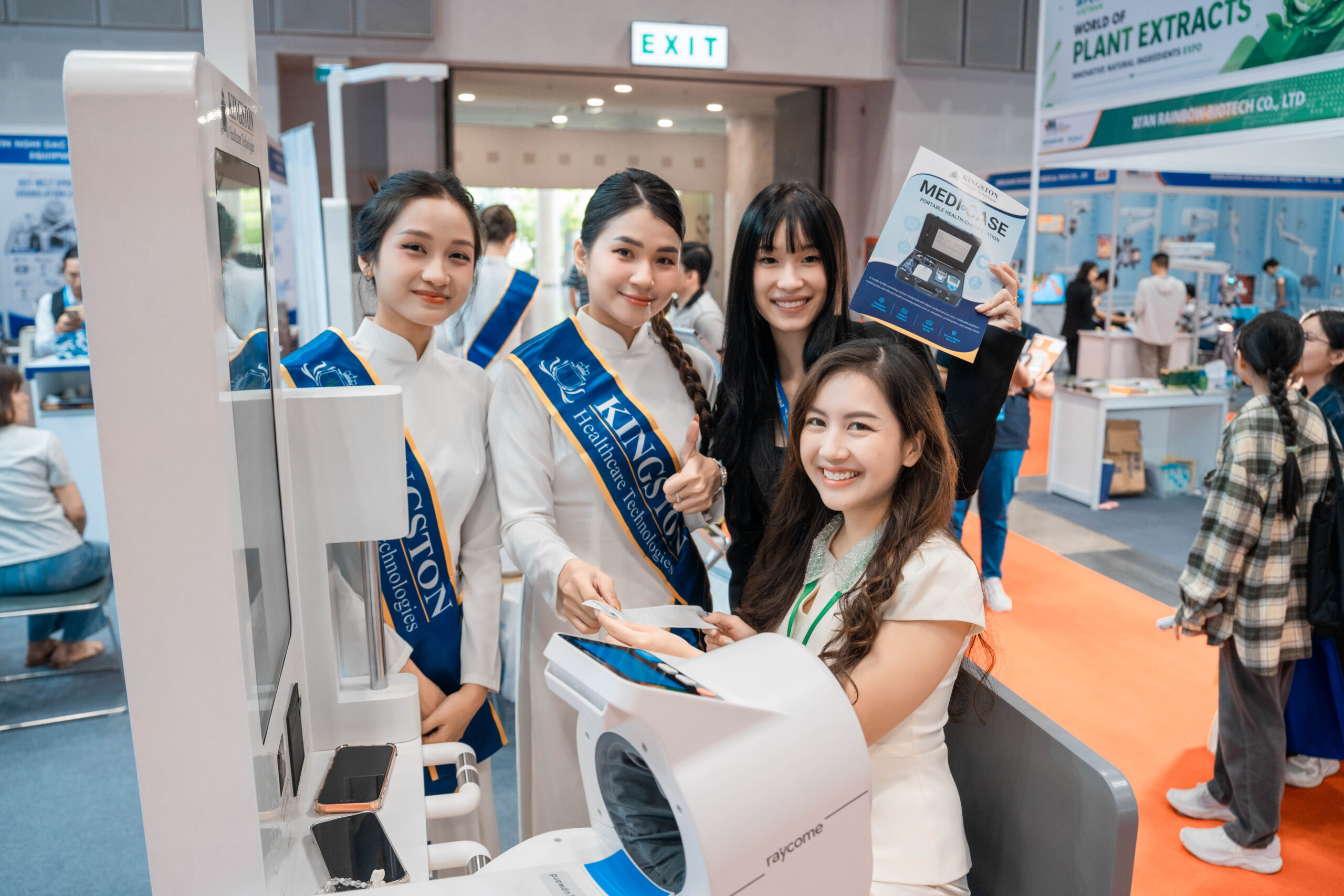
Employee doing a health checkup right at the workplace, part of the proactive care model
Periodic health checkups are the foundation, not the whole strategy
Periodic health checkups help businesses:
✅ Get an overall assessment of employees' health status
✅ Detect certain risks that need monitoring
✅ Receive advice on further examinations or tests when needed
✅ Build health records for each checkup cycle
✅ Implement employee care programs in line with applicable regulations
However, this model still has certain limitations.
Results are typically recorded in batches, while many health indicators change continuously. Employees may also receive reports without knowing which indicators to track or what action to take next.
For HR and HSE/EHS teams, data from multiple checkup cycles is sometimes scattered, difficult to compare, and not yet turned into a long-term care program.
Therefore, periodic checkups should be considered the starting point of the health management process, rather than the only activity.
What Is Proactive Employee Health Management?
Proactive health management is a model that combines periodic checkups, regular screenings, health data, and appropriate support programs. This is the core approach of a employee health management solution modern.
A complete model may include:
→
→
→
→
Instead of only reacting when employees show symptoms, businesses enable employees to proactively check certain indicators and recognize changes worth paying attention to.
The goal of this model is not to over-monitor employees, but to help each person access health care activities more conveniently, while helping businesses build a well-directed, measurable benefits program.
1. Add More Health Check Points at the Workplace
A common barrier is that employees don't have enough time or motivation to visit a medical facility to check basic indicators between two checkups.
Businesses can set up health stations (health check kiosks) at the workplace in:
✅ In-house medical room
✅ Employee welfare areas
✅ Office lobbies
✅ Common areas
✅ Factories or production areas
✅ Branches and operational sites
Here, employees can proactively check indicators such as height, weight, BMI, blood pressure, heart rate, SpO₂, or body temperature, depending on the device configuration.
Bringing screening activities closer to employees helps reduce access barriers and encourages the habit of more regular health monitoring.
2. Track Trends Instead of Just Looking at One Result
A single indicator only reflects the condition at the moment it was measured. The real value emerges when results are recorded and compared over multiple checkups.
For example, employees can track:
✅ Changes in weight and BMI
✅ Blood pressure trends across multiple readings
✅ Resting heart rate fluctuations
✅ Results before and after a physical activity program
✅ Changes in physical condition after nutrition counseling
Data tracked over time helps users notice changes earlier and proactively discuss them with medical staff when needed.
For businesses, aggregated and anonymized data can help assess general workforce trends, provided that data collection, access, and use are carried out transparently, for the right purpose, and with appropriate access controls.
3. Design Wellness Programs Based on Data
Many employee health care programs are organized based on general trends but may not accurately reflect the needs of each individual business. According to the "Healthy Workplace" framework by the World Health Organization (WHO), an effective wellness program needs to be based on data and the actual needs of each workforce group.
With the right data, HR or HSE/EHS departments can develop more focused programs, such as:
✅ Weight and nutrition management
✅ Cardiovascular health care
✅ Raising blood pressure awareness
✅ Encouraging physical activity
✅ Non-communicable disease prevention
✅ Health care for shift workers
✅ Health screening days
The effectiveness of the program can be assessed based on participation rate, frequency of use, employee feedback, and trends in relevant indicators.
As a result, wellness activities shift from one-off communications to a purposeful journey with data and specific tracking steps.
4. Supporting the Medical Room and HSE/EHS Departments
At large enterprises, the medical room often has to handle many repetitive requests such as measuring blood pressure, weight, and temperature, or recording initial health information. This is an important part of any employee health management solution aimed at long-term operational efficiency.
When part of the process is automated, medical staff can focus more on:
✅ Supporting employees whose results need attention
✅ Assessing symptoms and actual conditions
✅ Providing health care advice
✅ Tracking cases with risk factors
✅ Referring employees to medical facilities when needed
✅ Developing appropriate prevention programs
Technology does not replace a company's medical room. Its role is to reduce repetitive measuring and data-entry tasks so the professional team can spend more time on counseling and care.
5. Connect Data into a Continuous Care Journey
An effective employee health management solution should not create additional fragmented data files.
Depending on the scope of implementation, data can be organized on a management platform to:
✅ Link results to the correct user profile
✅ Store check history
✅ Help users track trends
✅ Compile program reports
✅ Manage multiple health points
✅ Support in-person or remote consultation
Businesses need to clearly define who has access, what purpose the data is used for, and how personal results are protected. This is an essential factor in building a trustworthy employee health management solution.
Health information should not be used to discriminate against or disadvantage employees.
Medi-Kiosk in the Employee Health Management Model
Medi-Kiosk by Kingston Healthcare Technologies (KHT) is developed by combining health measurement devices, a guided interface, and a data platform in a single screening station. This is a real-world example of an employee health management solution designed to support, not replace, the medical team.
Depending on project needs, Medi-Kiosk can help record basic indicators such as:
✅ Height and weight
✅ BMI
✅ Blood pressure
✅ Heart rate
✅ SpO₂
✅ Body temperature
A single use can be organized following process:
→
→
→
→
Medi-Kiosk can be considered for deployment at offices, factories, industrial parks, in-house medical rooms, or health care programs across multiple locations.
The solution does not replace periodic checkups or a doctor's diagnosis. Medi-Kiosk serves as an additional screening point between checkups, helping track indicators and increasing access to health care activities at the workplace.
A Suitable Implementation Roadmap for Enterprises
Businesses can start step by step instead of investing all at once. A step-by-step approach helps reduce risk when deploying an employee health management solution at scale.
Step 1: Assess Needs
Identify the users, workforce size, work environment, and priority health issues.
Step 2: Choose the Configuration
Select only the indicators that are truly necessary, avoiding investment in many modules that don't fit the program's goals.
Step 3: Pilot at One Location
Run a pilot at an office, factory, or medical room to assess usage behavior and adjust the process.
Step 4: Connect to the Care Program
Screening data should be linked to appropriate counseling, communication, physical activity, or nutrition activities.
Step 5: Evaluate and Expand
Enterprises can track:
✅ Number of uses
✅ Employee participation rate
✅ Return frequency
✅ Process completion rate
✅ Number of cases needing support
✅ Satisfaction level
✅ Effectiveness of the care program
After the pilot phase, the model can be adjusted and expanded to other locations. This is also the stage to refine the employee health management solution before scaling it company-wide.
⚠️ Note: Measurements from the kiosk are for initial screening and reference purposes only, and do not replace periodic checkups, diagnosis, or treatment by a doctor.
Ready to deploy an employee health management solution?
Contact Kingston Healthcare Technologies for advice on a model suited to your business's scale and needs.